
You’re Healing: What Knee Replacement Recovery Pain Really Means

If you’ve recently had a knee replacement, you probably expected some pain during your recovery. What catches many patients off guard, however, is the timing of that pain.
Many patients expect the worst pain to occur after waking up from surgery. However, you might feel a little pain during your hospital stay and even throughout the day at home, only to find that your knee begins to ache several days later and at night when you try to fall asleep.
Actually, your pain is pretty much minimal in the hospital,
said Dr. Miller, an orthopedic surgeon with CHRISTUS Health in Alamogordo.
The 72-Hour Window: Hospital vs. Home
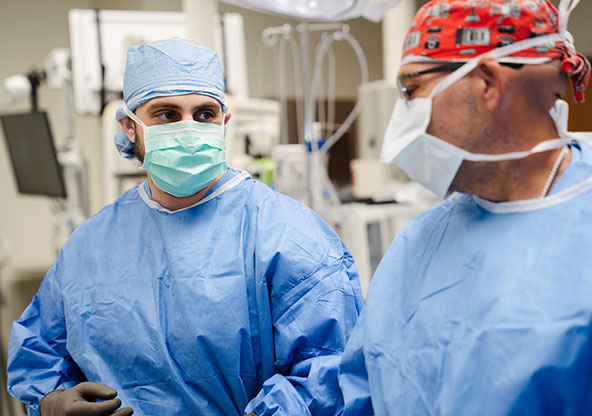
The good news? It is entirely normal and a sign that your body is doing exactly what it is supposed to do.
This is because your surgical team uses a “multimodal” approach to control pain. During surgery, you could receive a combination of general sedation, spinal or peripheral nerve blocks.
The medications usually used in total joint replacement are effective for 72 hours,
Dr. Miller said.
Once you are about three days out from surgery, hospital medications begin to wear off just as your swelling and stiffness naturally peak.
For the next week or so, managing your pain with prescribed medications and oral anti-inflammatories becomes key.
The Nighttime Ache is Healing
So, why does the knee ache so much more when you are trying to sleep? It comes down to basic physiology.
As we're falling asleep, we're actually changing our physiology a little bit,
Dr. Miller said. Your breathing gets a little bit shallower, which changes the pH of your blood.
That small change in blood pH can cause your body to release inflammatory cells that help drive healing. Inflammation is a crucial part of the recovery process.
A little bit of that pain that you're feeling at night is because your body's actually trying to heal some things,
he said.
The goal is to keep you comfortable enough that pain doesn’t repeatedly wake you from sleep. If you notice more aching at the end of the day, it usually reflects a mix of normal factors during recovery, and it’s often a sign your body is healing.
Recovery Starts with a Plan
Healing after knee replacement actually starts before surgery is even scheduled.
Care teams follow Enhanced Recovery After Surgery (ERAS) protocols. These nationally recognized guidelines are designed to support healing before surgery begins and continue through recovery at home.
Our total joint replacement program is evidence-based and built around these protocols,
said Hazel Nabong, a registered nurse who cares for patients recovering from joint replacement. When patients understand the process ahead of time, it helps reduce fear and uncertainty.
To help prepare, patients are encouraged to attend a joint class that teaches them what to expect before, during and after their procedure.
The recovery-focused practices help make care safer and more predictable for patients. ERAS protocols are used in hospitals nationwide to support smoother recoveries, fewer complications and clearer communication. The total joint replacement program is also part of a hospital accredited by DNV, an independent organization that reviews hospitals for safety and quality.
For us, it’s about giving patients the best chance to heal well,
Nabong said. We want them to feel supported, informed and confident as they move forward with their recovery.
Getting Back into the Groove: Life After Recovery

Dr. Miller said many patients worry that if their knees hurt, they should stop moving. Others worry about “wearing out” their brand-new joint.
However, Dr. Miller actively encourages patients to let go of those fears. Your new joint is built to handle an active lifestyle.
Part of what gets you into a knee surgery is that you stopped doing activities that you wanted to do because you were limited by your knee pain,
Dr. Miller said. Let this new knee be part of you, keep living your life and start doing things that you want to do.
Knee Care in Alamogordo
Take the Joint Risk Assessment
Learn if your joints are healthy
When hip or knee pain slows you down, it can affect your daily routine. Our online assessment helps you understand how your joints are functioning and what you can do to improve your joint health.
