
A Second Chance at Peace: Pam and Kenneth’s Journey with AFib and the Watchman™ Procedure
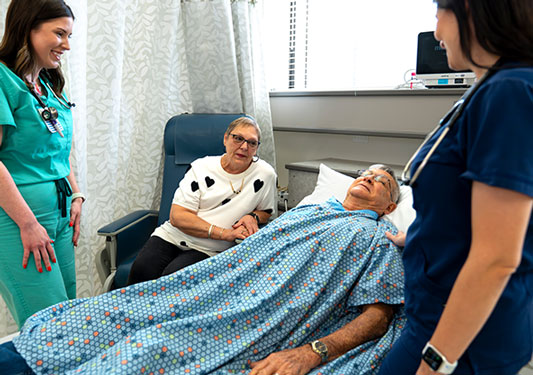
For years, Pam Carrier lived with symptoms she could never quite explain. Sometimes she felt a tightness in her chest, a sudden choking sensation, or waves of dizziness that made her stop what she was doing.
“I was scared to even drive,” Pam said. “I never knew when those awful feelings would hit.”
What she didn’t know then was that she was living with atrial fibrillation, commonly referred to as AFib.
AFib is a heart rhythm condition that causes the upper chambers of the heart to beat irregularly and sometimes too quickly. This uneven rhythm affects how well blood moves through the heart and can allow clots to form, raising the risk for stroke or heart failure.
According to the American Heart Association, between 2.7 and 6.1 million people in the United States live with AFib, and the condition increases the risk of stroke by about five times compared with those who have a normal heart rhythm.
It took years for Pam to learn about a treatment that could bring her relief: the Watchman™ procedure.
“When I finally had the Watchman put in, it was such a relief,” she said. “No more choking feeling. No more tightness. It was the best decision I ever made.”
Pam expected her life to feel different after her procedure. What she didn’t expect was that her husband, Kenneth, would soon be facing the same diagnosis, with a very different experience.
When AFib Looks Different from Person to Person
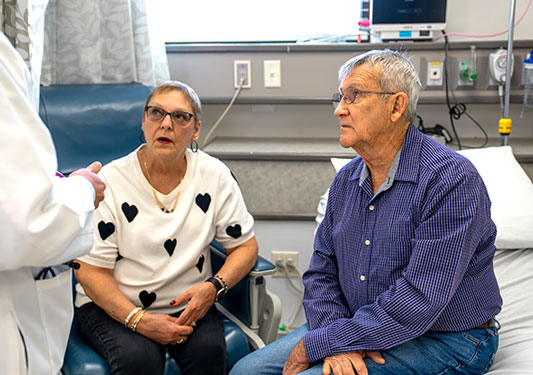
Kenneth didn’t experience the sensations Pam described. He didn’t feel fluttering, chest pressure, or dizziness. Instead, his AFib was found through his home heart monitor.
“They called and told me my monitor picked up AFib,” he said. “I didn’t even know it was happening.”
While he wasn’t feeling the rhythm changes, he suddenly began having severe nosebleeds in the middle of the night. Blood thinners, which are often used to prevent clots in people with AFib, made him bruise and bleed easily — even baby aspirin caused problems.
“It scared the heck out of me,” Pam said. “I’d never seen anything like that.”
When Kenneth met Dr. Thomas Mulhearn, interventional cardiologist with CHRISTUS Health, he learned why this was happening.
“Kenneth had a history of atrial fibrillation,” Dr. Mulhearn said. “He was on a blood thinner, but it was causing significant bleeding. He was a good candidate to come off blood thinners and still be protected from stroke.”
Dr. Mulhearn said that while blood thinners help many people, the risk of bleeding increases with age. For patients like Kenneth, the safer long-term option is to protect them from stroke without relying on daily medication.
“This is about quality of life,” Dr. Mulhearn said. “Helping someone return to the life they knew before — without fear of stroke and without the side effects of blood thinners — that’s the goal.”
What the Watchman Does, and Why Patients Consider It
The Watchman device is a small implant that seals the left atrial appendage, a pouch in the heart where clots are likely to form during AFib.
By closing this space, blood can no longer pool there, lowering the chances of a clot traveling to the brain and causing a stroke. For many people, this option also means they may no longer need to stay on long-term blood thinners.
Inside the Procedure: Calm, Quick, and Precise
The procedure is done under general anesthesia.
“It usually takes 45 minutes to an hour,” Dr. Mulhearn said. “We make a small incision at the top of the leg and guide the device through a vein into the top left chamber of the heart.”
Patients typically stay one night in the hospital and recover quickly.
Kenneth remembers how calm and reassuring the team was. “The anesthesiologist told me, ‘You won’t feel a thing,’ and I didn’t,” he said.
Recovery and New Strength
After surgery, Kenneth began noticing changes:
- No more bleeding
- No more nosebleeds
- Less shortness of breath
- A stronger heart function
- More energy each week
Pam also regained parts of her life she feared she had lost.
“I feel like myself again,” she said. “I don’t have those awful symptoms anymore.”
With both recovering, they’ve started planning for the future:
- Getting back to camping
- Returning to the hobbies they love
- Working toward a bucket list trip to Hawaii
- Enjoying everyday life without fear
“We just want to get back to normal,” Pam said. “And this made that possible.”

Meet Pam and Ken's Cardiologist
Take the Heart Risk Assessment
Check Your Risk of Heart Disease
Take our heart assessment to see if you are at risk of heart disease.
