
Living with chronic back pain: Richard's journey to relief
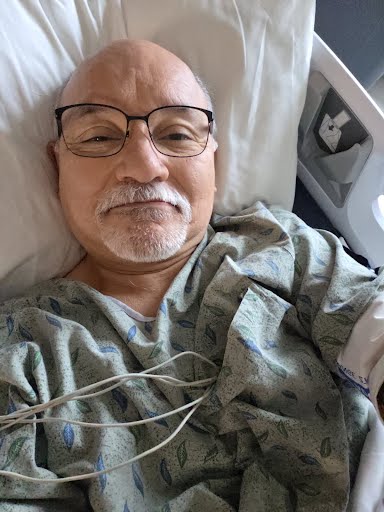
For years, Richard Ozuna couldn't stay comfortable in his chair for long. The pain radiating through his leg often made it feel "like it was in a vice," forcing him to constantly shift positions.
However, after 32 years with the San Antonio Fire Department, including 21 years as a field paramedic, Richard had grown used to pushing through discomfort.
Richard underwent two neck fusions, shoulder reconstruction and three hip repairs, all while continuing to stay active and care for others. Additionally, he exercised, watched his weight and fine-tuned his diet to maintain his mobility for as long as possible.
But eventually, the strategies that had helped him manage the pain were no longer enough. After more than 35 years of chronic back pain, Richard shifted his mindset and decided it was time to stop simply living with pain and explore other options.
"Don't be ashamed to ask for help," Richard said. "If it's there, take it."
Exploring surgery for chronic back pain
Richard was ready to address the source of the pain rather than continue managing its symptoms.
He met with orthopedic surgeon Dr. Gautham Prabhakar, who reviewed his MRI and recommended a transforaminal lumbar interbody fusion (TLIF), a type of spine surgery used to relieve pain caused by damaged discs and spinal instability.
A one-day approach to spine surgery
Richard underwent his procedure at CHRISTUS Santa Rosa Hospital - Westover Hills.
Working alongside vascular surgeon Dr. Matthew Sideman, the surgical team removed three damaged discs and replaced them with titanium cages in a single day rather than the typical two-part approach.
For Richard, that mattered.
Completing the procedure in one day meant recovering from one surgery instead of two, helping make the recovery process easier and allowing him to focus on moving forward rather than facing a second operation days later.
What stood out most, however, wasn't just the procedure itself. From pre-surgical appointments to recovery, Richard said he felt supported by the people caring for him.
"They were just so kind and thoughtful and considerate," Richard said. "I always felt like I was being dealt with as an individual, not like a number."
Recovery and a renewed outlook
Today, Richard can fall asleep more easily, walk about 4,000 steps a day and sit through a meal without constantly needing to stand up and relieve the pressure in his leg.
"My mental health is better," Richard said. "This right leg pain that I was living with is gone.”
He's also gained a new perspective on what it means to live with chronic pain.
The experience reinforced something he hopes others remember: pain may feel personal, but it often affects more than the person experiencing it.
"I should have taken my family more into consideration," he said. "What I was going through was having an effect on them.”
He encourages others not to ignore the signs or accept pain as their normal.
"Don't let this mindset of, 'I can do it, I can do it, I can do it,' get in the way of your health," Richard said.
Sometimes, the strongest thing you can do isn't push through the pain. It's deciding you're ready to leave it behind.
When should you seek help for back pain?
While occasional back pain is common, it may be time to talk with a specialist if pain is:
- Limiting your daily activities or mobility
- Interfering with sleep
- Causing numbness, tingling or weakness in your legs
- Continuing to worsen despite exercise, stretching or other lifestyle changes
Pain doesn't have to become your normal.
