Casen’s Story: A Rainbow Baby’s Fight Against Shone’s Complex and a Life Saving NICU Journey
After a heartbreaking miscarriage, Candice Chapman believed her journey into motherhood had reached its end. She already had two sons — Ryan, 12, and Rene, 10 — and had quietly come to terms with the idea that her family was complete.
Then something unexpected happened.
I was exhausted all the time and all I craved were cheeseburgers from Burger King
, Candice laughed. I wasn’t even thinking I could be pregnant again.
Day after day, the cravings continued enough that her coworkers began to notice. One finally asked the question Candice hadn’t yet allowed herself to consider: Are you pregnant?
I remember thinking, Maybe… maybe I am
, she said.
The day before Thanksgiving, Candice took a pregnancy test. When it came back positive, she was overwhelmed with emotion.
After losing a baby just a few months before, I had already accepted that I wasn’t going to have another one
, she said. Finding out I was pregnant again felt like a miracle.
Casen was her rainbow baby — a symbol of hope after loss — and from the very beginning, Candice cherished the pregnancy, even as it brought new challenges.
A High Risk Pregnancy and Early Monitoring Revealed Possible Heart Defects
High risk pregnancies like Candice’s often require frequent maternal fetal monitoring to detect early signs of congenital heart defects.
Because of her Type 2 diabetes and age, Candice’s OB-GYN, Valentin Almandares, MD, referred her to a maternal-fetal medicine (MFM) specialist for closer monitoring. When traveling to the medical center became difficult, her care team helped coordinate a referral closer to home at CHRISTUS Children’s, where she began seeing Dr. Lea Porche, her MFM, every two weeks.
At first, everything looked okay
, Candice said. The ultrasounds were long and very detailed, but they told me that was normal because of my risk factors.
Midway through her pregnancy, one of those ultrasounds raised concerns. While doctors couldn’t immediately confirm a diagnosis, they noticed subtle signs that something might be affecting Casen’s heart. To be safe, Candice was referred to Monesha Gupta, MD, a pediatric cardiologist and director of the fetal cardiology program at CHRISTUS Children’s.
Candice’s first fetal echocardiogram lasted nearly two hours.
I was worried
, Candice said. I kept thinking, If this is taking so long, did they see something they’re not telling me?
Understanding a Shone’s Complex Diagnosis During Pregnancy
Shone’s complex is a rare congenital heart condition, and receiving this diagnosis during pregnancy can be overwhelming. For expectant parents like Candice, early detection made all the difference in creating a safe plan for delivery and newborn care.
A few weeks later, Dr. Gupta asked Candice to return to review the results in person. Sitting together, Dr. Gupta used a hand-drawn diagram of the heart to explain what she was seeing.
Casen’s heart showed signs of Shone’s complex, a rare congenital heart condition that affects structures on the left side of the heart.
Shone’s complex isn’t a single defect, but a group of abnormalities that can include narrowing of the mitral valve, obstruction below or at the aortic valve, and coarctation of the aorta, a narrowing of the main artery that carries blood from the heart to the body. Not every child has all four components, and severity can vary.
They gave me a binder with a drawing of his heart and explained everything
, Candice said. I cried from the minute they told me. It didn’t feel real. I was still pregnant, and they kept saying, This is what it could be. But I was already scared.
Doctors explained that while Shone’s complex was suspected, they wouldn’t fully understand the extent of Casen’s condition until after birth, when more advanced imaging could be done. Until then, Candice’s pregnancy would be monitored closely and a plan would be in place to move quickly after delivery if needed.
Planning a Safe Delivery for a Baby with Suspected Congenital Heart Defects
Because of her type 2 diabetes and Casen’s size, Candice was induced at 39 weeks. After careful consideration, she chose to deliver at CHRISTUS Children’s, where pediatric cardiology and NICU teams were already familiar with Casen’s case.
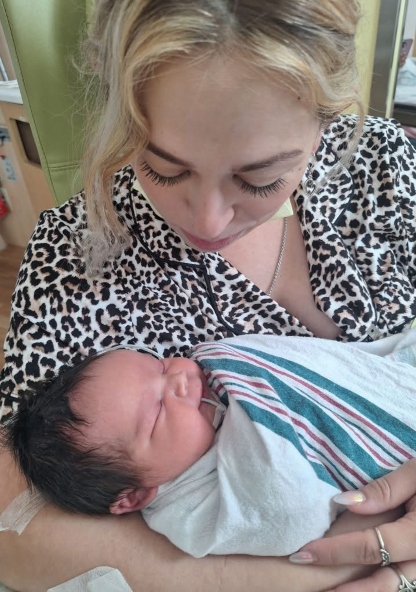
On July 16, 2025, Casen was born crying, a moment Candice will never forget.
They let me hold him for a few minutes before the NICU team took him
, she said. That was really important to me.
Within minutes, Casen was transported to the Neonatal Intensive Care Unit (NICU), where his heart could be closely monitored.
NICU Care for Newborns with Congenital Heart Defects at CHRISTUS Children’s
In the NICU, Casen was surrounded by monitors, wires and medications as doctors worked to confirm his diagnosis. He required breathing support and medication to help maintain blood flow while cardiologists performed echocardiograms and other imaging.
As a parent, it’s hard seeing your baby hooked up to all of that
, Candice said. The wires would get tangled when I tried to hold him, and every day I kept wondering, When is he going to come home?
After a week of testing, doctors confirmed Casen had coarctation of the aorta and a ventricular septal defect (VSD). While his VSD would be monitored to see if it closed on its own, surgery was needed to repair the narrowing in his aorta.
At just 1 month old, Casen underwent heart surgery to repair the coarctation of his aorta. The procedure was performed by Dr. Victor Bautista-Hernandez, chief of pediatric cardiothoracic surgery at CHRISTUS Children’s.
Dr. Bautista was very calm and confident
, Candice said. He explained everything and told me Casen was in good hands. Knowing this was something they do all the time brought me peace.
The surgery was successful, and Casen was moved to the Pediatric Intensive Care Unit (PICU) to recover before transitioning back through different levels of care in the NICU as his condition stabilized.
Comprehensive Care Beyond Heart Surgery with Feeding Support and Developmental Therapy
Casen’s journey didn’t end with heart surgery. As his recovery continued, his care team began to notice another challenge common among cardiac babies — difficulty feeding and tiring easily during meals.
Although Casen wanted to eat, he struggled to take in enough milk by mouth to support healthy growth. He would often become fatigued after only a few minutes, unable to finish a full feeding. To make sure he received the nutrition he needed, his care team carefully balanced oral feedings with nutrition delivered through a temporary nasal feeding tube.
He would try
, Candice said. But after a few minutes, he would get so tired. They were worried that if they didn’t help him, he wouldn’t get enough nutrition to grow.
To support Casen, occupational and speech therapists worked with him regularly, helping strengthen his feeding skills and monitoring his swallow to ensure he could eat safely. While progress was slow, Candice held on to the hope that, with time, Casen would be able to feed completely on his own.
As the weeks passed, doctors began discussing another option — a gastrostomy (G) tube — which would allow Casen to continue healing and growing at home rather than remaining in the hospital.
At first, I said no
, Candice said. I didn’t want to bring my son home with a tube in his stomach. I was scared of doing something wrong and I didn’t want him to be treated differently.
For Candice, the decision was emotional and overwhelming. She wanted nothing more than for Casen to eat independently, to leave the hospital without another procedure, and to bring him home the way she had with her older children. But she also knew he needed more time and support to build strength.
About two weeks before Casen’s discharge, Candice made the difficult decision to move forward with the G-tube.
I realized it was the best way to get him home
, she said. It didn’t mean this was forever — it just meant he needed a little more help right now.
With the G-tube in place, Casen continued to gain strength and the focus shifted toward preparing Candice to care for him at home. After nearly three months in the hospital — moving through multiple levels of care within the NICU — Casen was finally discharged on October 13, 2025.
That was the biggest relief
, Candice said. All my kids were finally under one roof again. That made my heart happy.
Life After Heart Surgery: Casen’s Ongoing Care and Encouraging Progress
Today, Casen continues to see Dr. Gupta for regular cardiology follow-ups. He also receives early childhood and occupational therapy to support his development.
Because Casen has a mild form of Shone’s complex, his cardiology care is focused on long-term monitoring rather than immediate intervention. He will continue to undergo periodic echocardiograms to assess heart function and watch for any changes as he grows.
Shone’s complex can look very different from child to child
, said Dr. Gupta. Some children require very close monitoring, medications or additional procedures, while others — like Casen — have a milder form that may never require further intervention. What’s most important is making sure we follow these children closely over time.
Children with Shone’s complex require lifelong cardiology follow-up, as certain changes can develop gradually. Casen’s care team will continue to monitor for potential complications, including the development of a subaortic membrane, re-narrowing of the aorta (re-coarctation) or pulmonary hypertension. Fortunately, Casen currently has only mild residual lesions, and there is a strong possibility he may never need another surgery or procedure.
Casen’s ventricular septal defects are also being monitored. These muscular VSDs have already begun to decrease in size on their own, which is a reassuring sign. In many cases, defects like these continue to shrink over time or close completely without intervention. If they remain, they are expected to be hemodynamically insignificant and unlikely to cause symptoms.
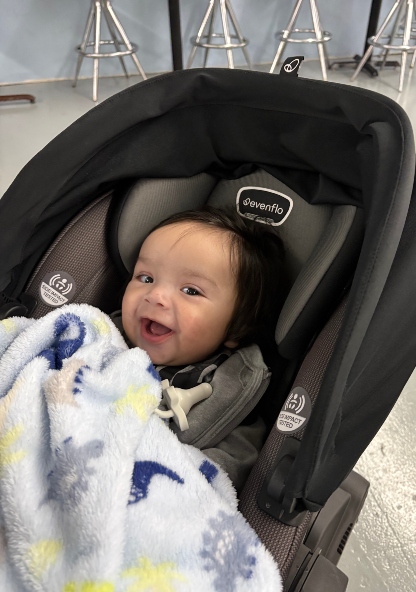
Most importantly, Casen is thriving.
He smiles every day,
Candice said. He laughs, he tries to talk, and he has the funniest facial expressions.
Watching her older sons bond with their baby brother has been one of the greatest joys of the journey.
What kept me going was my kids
, Candice said. I had to be strong for all of them.
Expert NICU and Pediatric Cardiology Care for Babies with Shone’s Complex
A suspected diagnosis of Shone’s complex can be frightening, but early evaluation by maternal fetal medicine and pediatric cardiology specialists — like those at CHRISTUS Children’s — offer families clarity and a path forward.
To learn more about the compassionate, specialized care provided in the Neonatal Intensive Care Unit (NICU) at CHRISTUS Children’s, visit CHRISTUS Children’s | NICU.
For more information about pediatric cardiology services at CHRISTUS Children’s, visit Pediatric Cardiology & Heart Care | CHRISTUS Health.